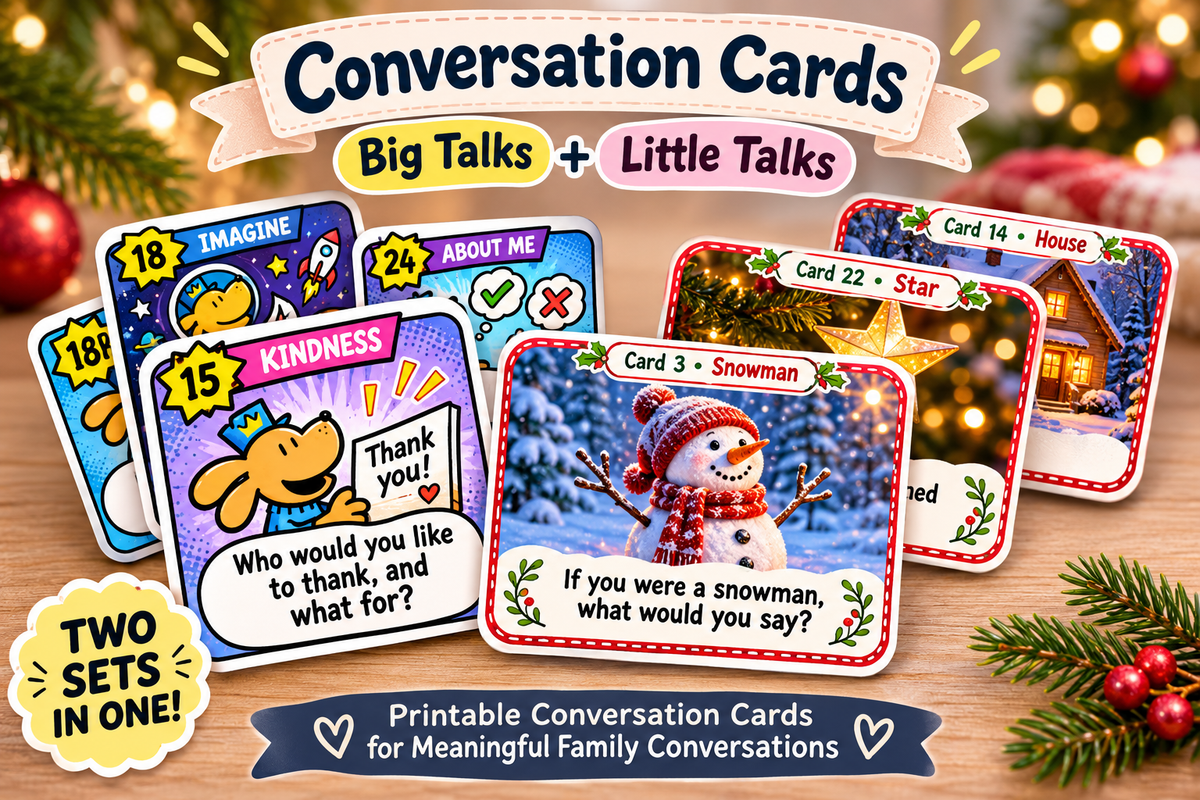
Christmas Conversation Cards for Kids: Little Talks + Big Talks

Regular price $4.99
Regular price $4.99 Sale price $9.99
Save 50% Sold out

Turn screen-off moments into the conversations you’ll remember forever.

24 photo-prompt cards for little ones (ages 2–6) and 24 illustrated question cards for bigger kids (ages 6–12)

Questions that actually get kids talking — from warm and silly

Print once, use all season — just download, print on A4 and cut

No thanks, dinner table silence is underrated

  • Klarna
  • PayPal
  • Mastercard
  • Visa
  • Apple Pay
verified

Not Merry Enough? Free Returns Within 30 Days

View full details
Learning Through Play
Made to Last
Expert-Approved
Designed for Kids
Learning Through Play
Made to Last
Expert-Approved
Designed for Kids
Learning Through Play
Made to Last
Expert-Approved
Designed for Kids
Learning Through Play
Made to Last
Expert-Approved
Designed for Kids
Learning Through Play
Made to Last
Expert-Approved
Designed for Kids
Learning Through Play
Made to Last
Expert-Approved
Designed for Kids
Learning Through Play
Made to Last
Expert-Approved
Designed for Kids
Learning Through Play
Made to Last
Expert-Approved
Designed for Kids

How to Use — Little Talks (Ages 2–6)

These cards are designed for short, joyful moments — no sitting still required. Each card has a beautiful Christmas photo on it (a snowman, a reindeer, Santa, mittens...) that your little one can look at while you read the question aloud.

A few ways to play:

  • Spread a few cards face-up on the floor and let your child pick the one they want to talk about first.
  • Use one card at bedtime as a gentle wind-down ritual — “What was the best part of your day?”
  • Some cards invite movement, like “How does a reindeer move? Show me!” — great for wiggly toddlers.
  • Take turns answering together. When you answer too, little ones feel safe to share more.

No prep, no rules — just pull out a card and start talking.


How to Use — Big Talks (Ages 6–12)

These cards go deeper, covering six themes: Christmas, Feelings, Family, Kindness, Imagine, and About Me. The questions are designed to spark the kind of conversations that don’t happen by accident — the ones where you actually find out what your child thinks, worries about, and dreams of.

A few ways to play:

  • Deal 3 cards each and take turns choosing which one to answer — everyone answers, including grown-ups.
  • Use the category themes to steer the mood: pick a Kindness or Family card before a family activity, or a Feelings card if something’s been on their mind.
  • For dinner table conversations, place the deck face-down and draw one card per person — no skipping allowed!
  • Some questions make great journaling prompts for older kids who prefer to write first and share after.

The questions work because they’re genuinely interesting for adults too — your kids will surprise you, and so will you.